Yosenabe (Japanese Hot Pot)
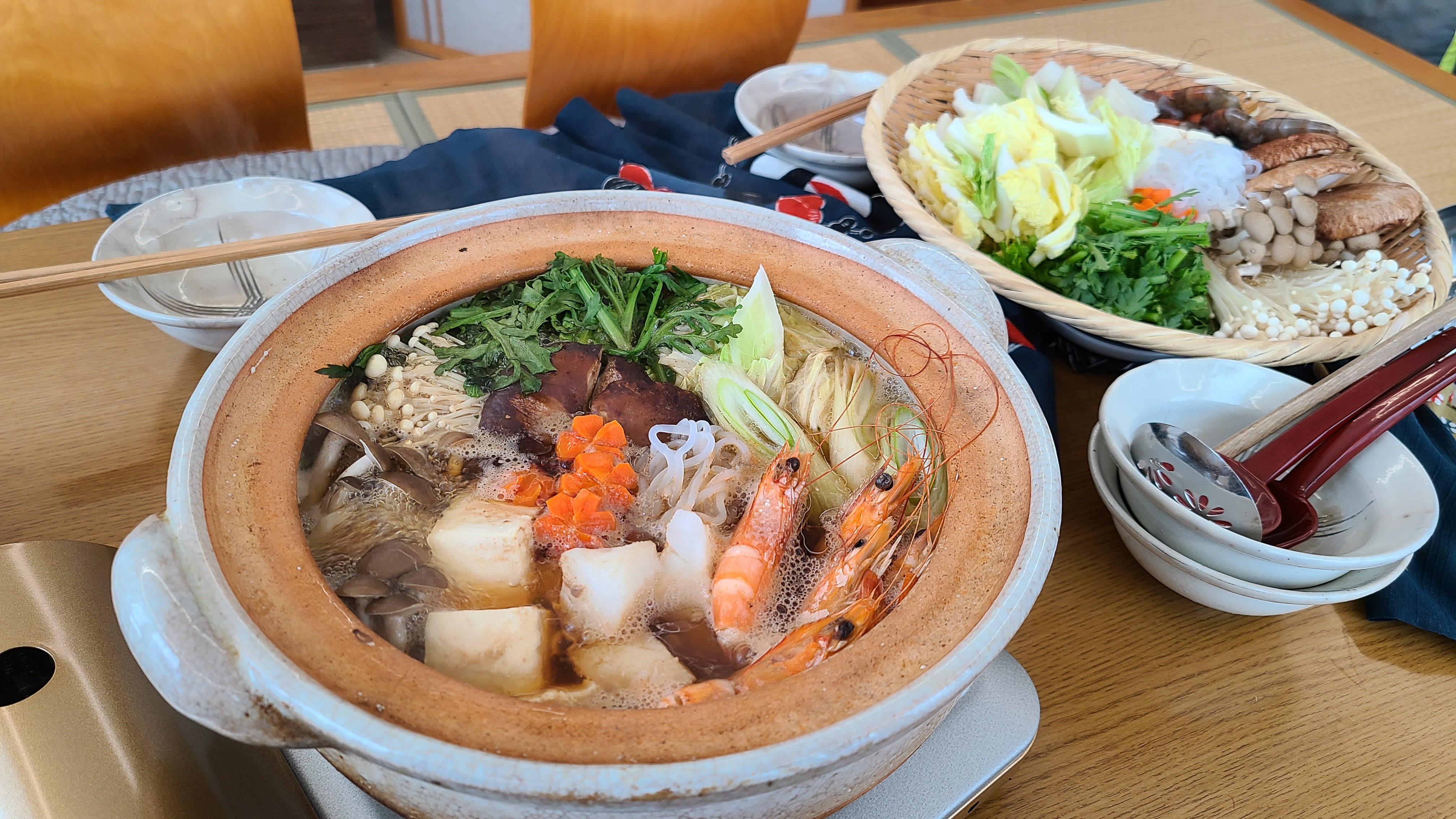
Yosenabe is a flexible style of Japanese Hot Pot and can include anything — it’s basically a “freestyle” hot pot. You can swap out any ingredient you like depending on your tastes and what you have available.
4
Product(s) Used
Special Diet
Dairy-Free, Gluten-FreeCourse
Main CourseMain Ingredient
SeafoodOccasion
Authentic JapaneseIngredients
- 1/2 Large head napa cabbage, cut into 2-3 inch length
- 1/2 bunch shungiku (chrysanthemum greens), cut into 2-inch lengths
- 1 naga negi Japanese long green onion (or 4 regular green onions), cut into ½ inch thick slices
- 1/2 carrot, cut into ¼ inch thick rounds
- 4 shiitake mushrooms, stems removed. Optional: slice cap with decorative cuts to make a flower pattern
- 1 package enoki mushrooms, base trimmed
- 1/2 package shimeji mushrooms, base trimmed
- 1 package medium-firm tofu, press then cut into 8 pieces
- 1 package shirataki noodles
- 1 pound cod boneless fillets, cut into 2 inch pieces
- 8 shrimp, shelled and deveined
For Awase Dashi (soup broth)
- 4 cups water
- 1 piece kombu, about 1/2 oz.
- 1 cup katsuobushi (dried bonito flakes)
- 4 tbsp. San-J Tamari Soy Sauce
- 4 tbsp. mirin
- 4 tbsp. sake
For Shime
- 1 cup cooked rice
- 1 egg
- 1 green onion, chopped
Equipment
- portable gas burner
Directions
Prepare Ingredients and Awase Dashi (soup broth)
- Simmer 4 cups of water with dried kombu in a large pot on medium-low heat for about 20-30 minutes. Don’t let the water boil.
- Meanwhile, clean and cut all vegetables. Press and cut the tofu. Peel and devein the shrimp. Arrange prepared ingredients on a big platter or bamboo zaru basket.
- Remove the kombu from the pot and discard. Turn up the heat to high and bring the water to boil. Add katsuobushi to the pot and simmer for 30 seconds. Then turn off the heat and let it steep for 10 minutes.
- Using a cheese cloth or a paper towel lined over a strainer, strain the stock to a large bowl.
- Pour the dashi into the large pot and add San-J Tamari Soy Sauce, mirin, and sake. Cover and bring to simmer, then turn off the heat.
How to Cook and Eat
- Set up a portable butane stove at the table for authentic hot pot experience; alternatively, use the stove top.
- Bring the soup broth to a boil.
- Add about ¼ portion of each ingredient to the pot, or however much will fit, arranging nicely by sections. Start with the vegetables that take longer to cook. Cover the pot with a lid and heat until all ingredients are cooked.
- Decrease heat to a simmer to keep the ingredients hot while everyone eats directly from the pot.
- When ready for more, turn up the heat and start adding ingredients for another batch. Repeat until all ingredients are gone or everyone is full.
How to Cook Shime
- Once all ingredients have been enjoyed and only the flavorful broth remains, add rice and cook to make porridge.
- After the rice is cooked and has creamy consistency, stir in egg and mix. Sprinkle chopped green onion on top and serve.
You can change up the ingredients depending on what you have or prefer. You can use meat such as chicken in place of fish or add shellfish such as clams, scallops, or mussels.
Shime means “to finish it up” in Japanese. The soup broth in the pot after all the ingredients are cooked is exceptionally delicious. Remove ingredients left in the pot if there are any, then add rice and cook. Other than rice, you can cook different types of noodles such as udon or ramen for shime. Garnish with green onion to serve.
Learn more about authentic Japanese hot pot in our article, A Complete Guide to Japanese Hot Pot.